IT FOLLOWS (2012)

Not to be downers, but, everything alive must die. This is something the kids from David Robert Mitchell’s devastating horror film must come to terms with, as they are stalked by a demonic entity that, no matter where they are, is constantly walking towards them. We sit down with Alison Willmore (Vulture / New York Magazine) to discuss how the film works as an allegory for social class, capitalism, personal trauma, sexual politics, and manages to channel both existential dread and the experience of a panic attack all at once. We wonder how to avoid the creature, what its scariest incarnation is, and whether a tale this bleak can have a happy ending after all.


Wherever you are, it is walking straight for you.

Hugh / Jeff


NATIONAL TREASURE (2004)

We sit down with Nicolas Cage expert Keith Phipps (author of The Age of Cage) to discuss the second highest grossing film of Cage’s career (second only to its sequel). We consider the point at which this film lands in the arc of Cage’s career, and how he draws on his well of acting experience to craft a character that blends elements of conspiratorial mania and fifth grade boy scout energy, selling the four-quadrant appeal of a movie about treasure hunting and historical preservation to both children and adults alike. We wonder what makes the film’s portrayal of patriotism appealing and then explore what could have been for Cage, concluding with some recommended overlooked Cage films to explore!


We’re more like treasure protectors.

Benjamin Franklin Gates


THE DA VINCI CODE (2003)

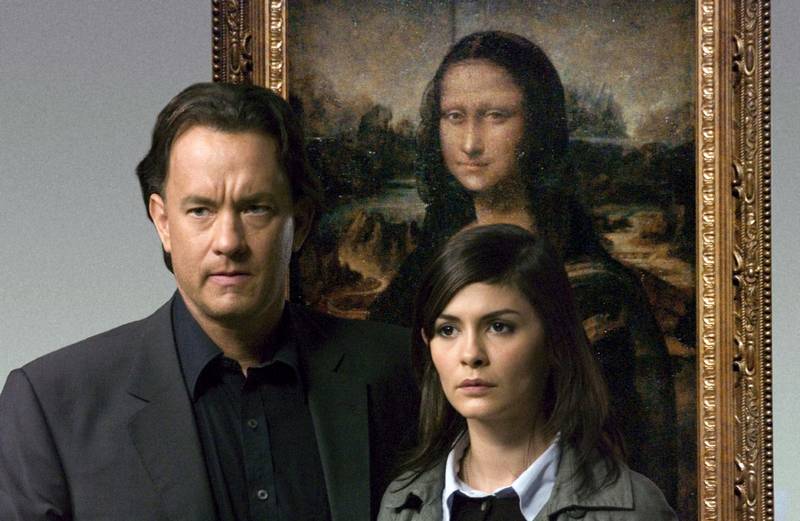
Have you ever wondered whether a famous painting contained a clue to a mystery that, once revealed, would upend the world as we know it? Well, you’re in luck because in this episode we dive into The Da Vinci Code with museum expert and curator Andrea Rosen! We explore the tough questions of whether to reveal the lie at the center of Catholicism or just go on living your life because no one would care, and then discuss the film’s art historical bonafides, whether Robert Langdon is a good professor, and whether this film, which has been mostly forgotten, deserves a dusting off and revisit!

“The Ambassadors” by Hans Holbein

Put it this way: One day the Templars simply stopped searching. They quit the Holy Land and traveled directly to Rome. Whether they blackmailed the papacy or the Church bought their silence, no one knows. But it is a fact the papacy declared these Priory knights, these Knights Templar, of limitless power. By the 1300s, the Templars had grown *too* powerful. Too threatening. So the Vatican issued secret orders to be opened simultaneously all across Europe. The Pope had declared the Knights Templar Satan worshipers and said God had charged *him* with cleansing the earth of these heretics. The plan went off like clockwork. The Templars were all but exterminated. The date was October 13th, 1307. A Friday.

Robert Langdon


COLLATERAL (2004)

Join us and Katie Walsh (LA Times, Miami Nice) for one night in L.A. as we journey through deserted streets with a meek cabbie dreamer (Jamie Foxx) and his assassin fare (Tom Cruise). We discuss cities and alienation, indecision and action, order and chaos, psychopaths and empaths, coyotes and subways. We gush about Cruise and Foxx playing against type, and wonder about how taxi drivers manage to keep all those streets straight. You might be surprised to find out where this Michael Mann film stacks up in his filmography for Katie, someone who hosts a podcast about another Michael Mann film (Miami Vice), but you won’t be surprised to learn that Laura loves the leanness of this ode to the city at night.


Don’t let me get cornered; you don’t have the trunk space.

Vincent


THE FIRST ANNUAL BLOBSCARS

Join us for a spoiler-free celebration of the very best films of 2021. We discuss our nominees and winners in the following categories: Best Picture, Best Director, Best Actor (non-gendered, pick 2), Best Supporting Actor (same thing), Best Score, Best Scene, and Most Overrated. Each film can win in only one category, so the stakes have never been higher! Tune in for the suspense, stay for the coveted, career-defining, awards.

Justin’s ranking of 2021 films


Welcome to the Blobscars!

Justin


BASIC INSTINCT (1992)

Join us and Matt Belenky (Movie Talk Podcast) to dive headfirst into Paul Verhoven’s classic 90s erotic thriller! We try to figure out what happened and why, and then explore how the film dissolves boundaries between Sharon Stone / Catherine Trammell and Nick Curran / audience member. We consider the possibility that the film is simultaneously exploitative and empowering, and lavish in its many unnecessary Americana details. Finally, we get to the bottom of why this was the peak time for ice picks.

Read Francey Russell’s article “What it Means to Watch” (Boston Review)


What are you going to do? Charge me with smoking?

Catherine Trammell


TWILIGHT (2008)

What does it mean to say that a movie is so bad it’s good? Is Twilight (2008) such a movie? We sit down with Matt Strohl (Philosophy, University of Montana), author of the new book “Why It’s OK To Love Bad Movies”, to talk about what it means to love and appreciate the beauty of bad films, and why bad movie love is an important and often overlooked mode of engaging with films. Along the way, we discuss the social aspirations of taste, what makes “Twilight” a potentially conventionally bad film and why those ‘flaws’ also contribute to its artistic achievement. Matt catalogs the various wide-ranging literary references embedded in the films and argues, contra the standard view that they push a conservative viewpoint about sex and marriage, that they are actually incredibly horny. We hope you’ll join us to give this much maligned film a second chance!


You’re like my own personal brand of heroin.

Edward Cullen


THE USUAL SUSPECTS (1995)

How should we feel about and how should we engage with art made by immoral artists? We consider these questions in the context of The Usual Suspects along with Erich Hatala Matthes (Wellesley), whose new book on the topic (Drawing the Line: What to Do with the Work of Immoral Artists from Museums to the Movies) provides a philosophical guide to the complexities of these challenging issues. We consider whether the film’s aesthetic value is diminished by the behavior of its creators, and discuss why, considered on its own, there’s a lot to recommend this tightly-wound neo-noir. So join us to think through the question yourself, and return to this 90s classic that reignited Hollywood’s obsession with twist endings.

Bryan Singer’s Accusers Speak Out (The Atlantic)

The sexual assault allegations against Kevin Spacey span decades. Here’s what we know. (Vox)


I know what I wanted to know about Keaton.

Dave Kujan


SPIDER-MAN 2 (2004)

Come swing through the streets of Manhattan with us and Sam Adams (Slate) as we discuss Sam Raimi’s melancholic and reflective Spider-Man 2! We talk about the film’s major themes of grief and the burden of heroism, as well as Sam Raimi’s view of humanity as fundamentally decent. We consider the film in light of the tragedy of 9/11 and how it highlights the heroic in all of us. We also marvel at how a big budget superhero film manages to have a climactic finale that consists mostly of two guys reflecting on how they have to give up their dreams in the pursuit of a greater good. Look out for guest appearances by the guy from the Tenet trailer and Chad Kroeger of Nickelback!

Read Sam’s piece on Spider-Man 2!


I’m back! I’m back! My back. My back…

Peter Parker / Spider-Man


THE MATRIX RESURRECTIONS (2021)

It’s time to go back to the Matrix! Join us and David Chalmers (Professor of Philosophy at NYU) to discuss the fourth Matrix film, and distinguish what we like and don’t about its meta- and first-order narrative interpretations. We bring in past and future guest Emily VanDerWerff to provide some broader context about the film and what makes it great, before turning to discuss whether what happens in a simulation is real and whether we can live a good life in a simulation. We also consider whether we are computer programs, what obligations we might have to computer programs, and the nature of human/computer program sex and procreation inside of the Matrix.

Buy David Chalmers’ book on the philosophy of virtual reality!

Justin’s review of The Matrix Resurrections

Emily VanDerWerff on The Matrix Resurrections and trauma


This is about our future, which is a sticky subject given our past.

Smith