The two cows journey into the madness of toxic masculinity, pairing the madcap Nicolas Cage classic “Vampire’s Kiss” with the recent Kitty Green masterpiece, “The Assistant.” How do artists use hyper-realism and non-realist expressionism to depict challenging and often elusive problems? What is the significance of using vampirism as the framing device to portray workplace misogyny? And how can we cope with the moral harms toxic masculinity imposes on those of us forced into the orbit of a serial predator?
Well, the fact is, I did murder someone last night. I turned into a vampire. It’s a long story.
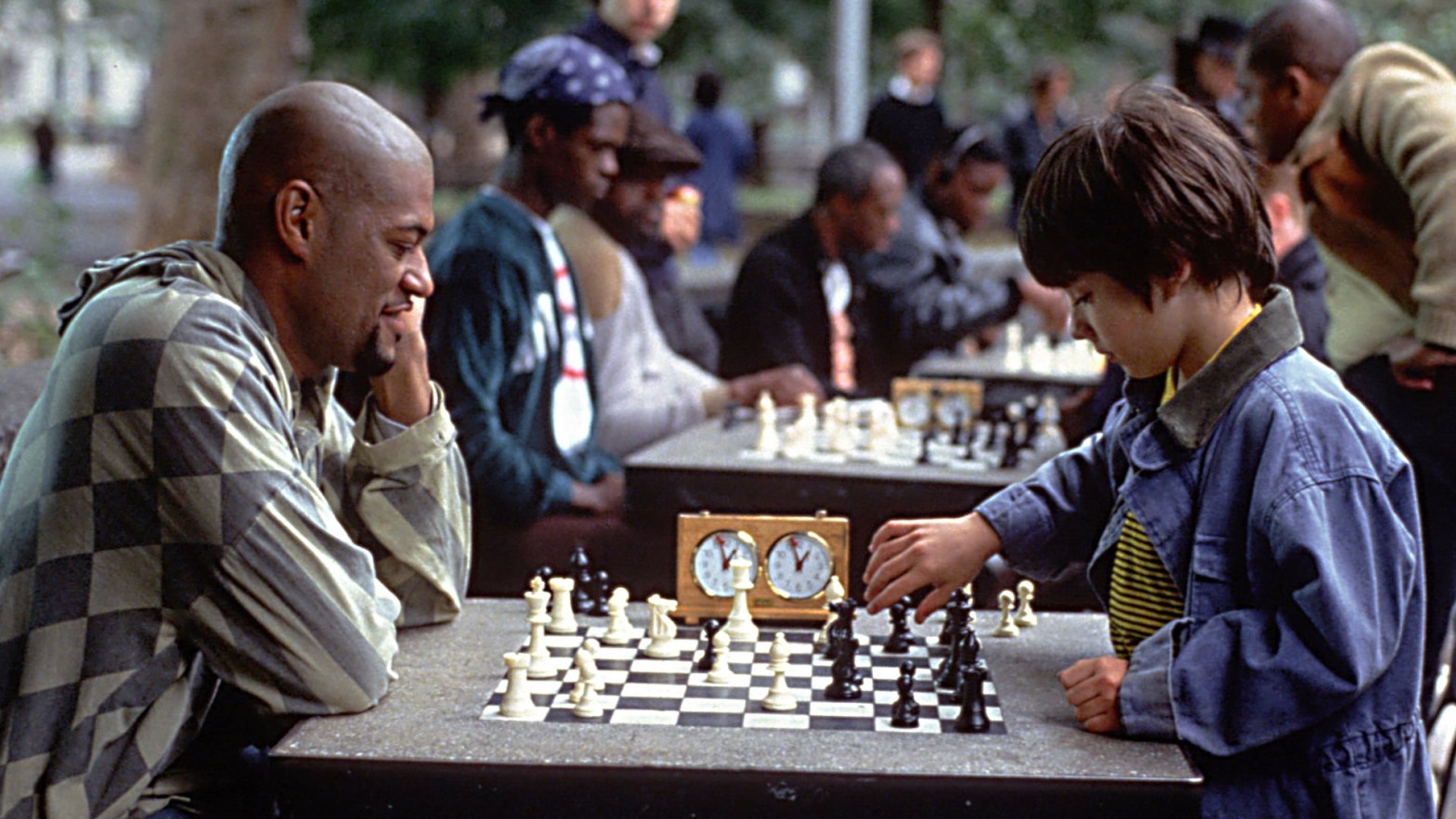
The two cows visit the chess hustlers in Washington Square Park to dive deep on one of the best sports/parenting movies, Searching for Bobby Fischer. What does the pursuit of excellence demand, and is it ultimately worth it? How should we as parents or mentors advise those who would strive for such greatness? Also discussed: the tragic and cautionary tale of Bobby Fischer, Jordan vs. LeBron, contempt vs. compassion for one’s opponents, and the fashion of IZOD polo shirts.
Standing as one of the best sports movies of all time, Steven Zaillian’s overlooked masterpiece is a thoughtful reflection on our often unhealthy collective obsession with genius. Young Josh Waitzkin is a talent, assuredly, but thankfully not as singular as his story’s namesake (for unnerving evidence of this, see the HBO doc “Bobby Fischer Against the World”). Our journey as an audience is the same as his father’s, Fred Waitzkin, as he comes to accept that living a normal life is not squandering it, no matter what your gifts.
In a particularly poignant scene, Pandolfini brings Waitzkin senior to a prestigious chess tournament to open the latter’s eyes to some very real possible futures awaiting his son were he to continue deeper into chess. It’s an ominous scene filled with disheveled, sweaty, men hunched over endless rows of chess boards in a smoke-filled room, muttering to themselves, pacing, concentrating. Would Mr. Waitzkin ever knowingly wish such a future on his boy?
But Pandolfini is careful to intone the magic words, “His [Fischer’s] successor wasn’t here tonight; he’s asleep in his room in your house.” The chance to cultivate such pure talent—maybe even help him reach the heights of genius—might be a possibility few of us could turn down. And yet that vanity, rationalized as some kind of duty to art, is a mistake, one perhaps all parents must come to terms with.
Maybe it’s better not to be best. Then you can lose and it’s OK.
The two cows are joined by friend Vishal Dave to visit humanity in its final days in Children of Men, a movie that seems in retrospect sadly prescient for our current times. What would knowledge of the imminent end of humanity mean for the final generation of humans and how might it affect what matters to them? How does Cuarón weave does art and iconography into the film and what themes does he use art to invoke? Why does Julianne Moore rule? And more!
You know that ringing in your ears? That ‘eeeeeeeeee’? That’s the sound of the ear cells dying, like their swan song. Once it’s gone you’ll never hear that frequency again. Enjoy it while it lasts.
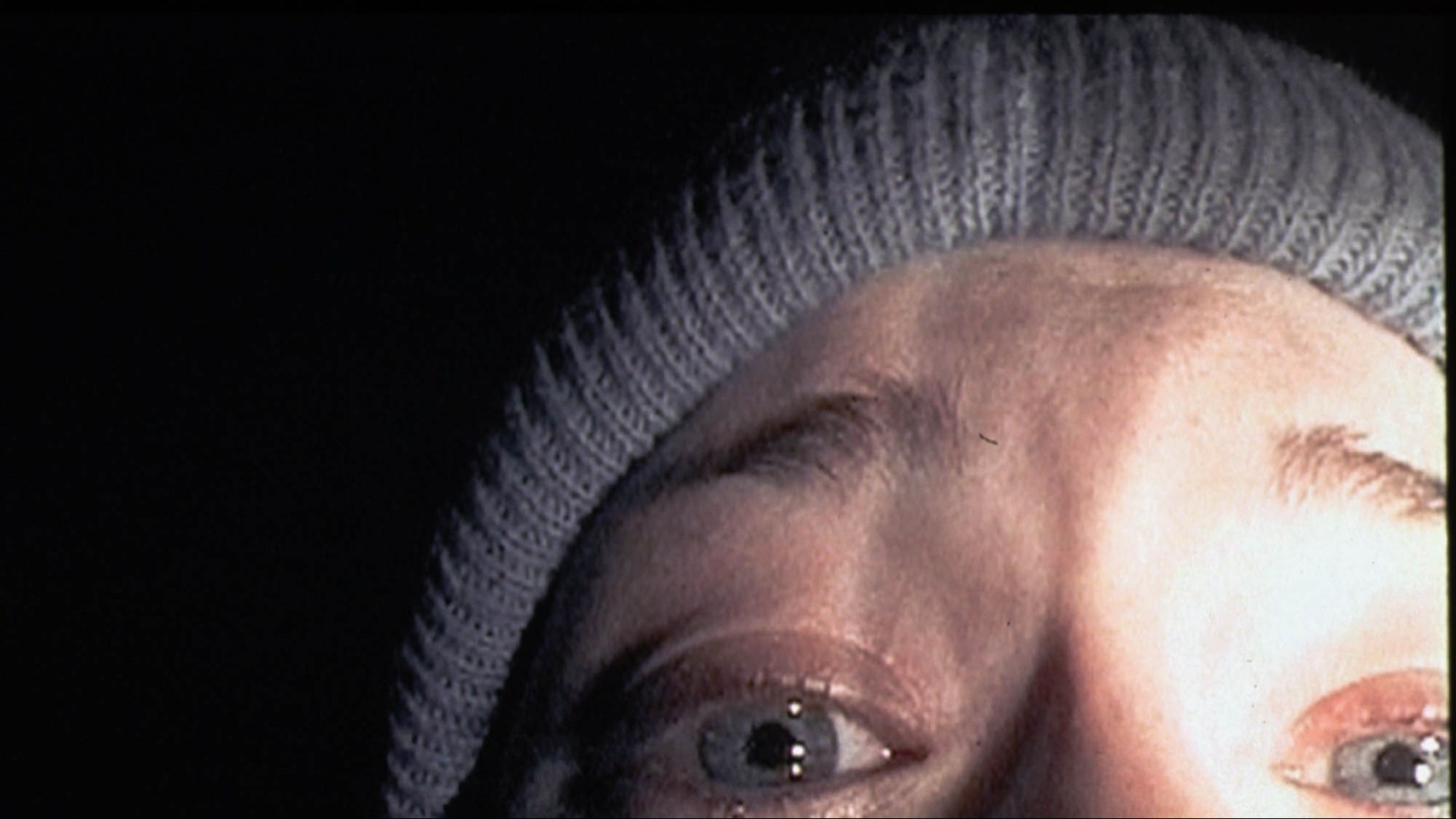
The two cows delve into the Black Hills Forest to sort out why the Blair Witch Project was the tenth highest grossing movie of 1999, why it took so long for Hollywood to capitalize on found footage horror, the nature of horror itself and why we desire to be horrified, as well as what makes the Blair Witch Project so especially horrifying.
Early on in their doomed journey into the Black Hills forest, our protagonists’ map goes missing. Previously the province of Heather, leader of this expedition and director of their would-be movie about the Blair Witch, her fellow crew members Mike and Josh seize upon this misfortune to blame her for their predicament — now lost, fear begins to drive them apart. Except that we later learn that Mike discarded the map in the water, an attempt to wrest power away from Heather (she being the only one capable of reading it) and to gaslight her into losing confidence in her own memory of keeping track of it.
That this is Heather’s expedition, that she is the director, writer, and star, of a documentary that they have been hired to merely assist in, is too much for these men. Like the men of Burkittsville or Salem before them, Josh and Mike attempt to undercut Heather in order to put her back where she belongs (behind them). But, in this case, they’ve inadvertently stumbled upon woods stained with the blood of one vengeful witch, who doesn’t take kindly to interlopers, even those who would follow in her footsteps (metaphorically speaking). // Blobcat
The two cows head to Texas with their pal Edward to consider one of the best film adaptations of a book ever. Topics discussed include encounters with the unintelligible, grappling with our shared fate of becoming lost to the passage of time, Sartrean bad faith, and Anton Chigurh’s quarantine haircut.
Conservatism is a clinging to the values and cultural touchstones of your time, forgetting that they are just some among many that are destined to be replaced and rediscovered by a generation looking to blaze its own path, just as yours did. // Blobcat
You can’t help but compare yourself against the old timers. Can’t help but wonder how they would’ve operated these times.
The two cows revisit a more innocent time, when Facebook was just a silly site where people posted relationship statuses and the only concerns about it involved whether your mom saw that frat party photo your friend tagged you in. Is Sorkin overrated? Is this a breakup movie? Is it a movie about revolutions without ideals? What is Jesse Eisenberg like in real life?
Of course it would be a petty, anti-social, narcissist who develops the world’s most popular social networking website. What’s interesting to me is how the perception of nerds has changed in the decade since the release of this movie, and how Sorkin did kind of sort of get it right from the jump. Here, the “lovable, harmless, nerd” archetype from popular culture gives way to a sinister, soulless, toxic persona, whose felt entitlement for attention/sex because they are smart, meek, not jocks, etc etc, would eventually become an online rallying cry for incel culture.
But Fincher/Sorkin also portray a changing society, as the American aristocracy whose families adorn on the walls of Harvard are forced to cede ground to upstart tech bros. The prescience here is impressive; remember: the iPhone debuted the same year as this movie. But the writing was on the wall all along. What the monied elites didn’t understand, but somehow Zuckerberg did, was that creating something “cool” was more powerful than creating something marketable. Blinded by their adherence to ancient codes, these elites (among them the Winklevosses and Saverin) couldn’t fathom why thinking in terms of bottom lines would be antithetical to your quarterly returns, something that proved to be their undoing.
But elites don’t go away quietly, this being a system designed to make it very very hard to redistribute power and money anywhere other than among people already with a lot of it. Yet, in the end, for Zuckerberg this wasn’t about money or power or being cool or anything of that sort. What drives Zuckerberg is being right and a bewildering intrinsic devotion to a website whose purpose is to connect people but whose repercussions have been to drive people deeper into siloed echo chambers filled with misinformation.
On a first watch, this movie left me cold. I didn’t understand why anyone would make such a harsh, sneering, critique of a harmless nerd who just wanted to make a silly website. But from today’s vantage, in our post-Cambridge Analytica world, it’s easier to be receptive to the movie’s critical tone. // Blobcat
You are going to go through life thinking girls don’t like you because you’re a nerd. And want you to know, from the bottom of my heart, that that won’t be true. It’ll be because you’re an asshole.
The two cows are joined this week by special guest Molly Moltario; together, they embark on an interstellar journey into the bureaucratic maze of academic funding. Join us for a discussion of aliens (where are they?), McConaughey vs. Fichtner (who best?), scrunchies (what do they signify?), our favorite first contact movies, and whether this is Robert Zemeckis’s masterpiece!
It’s an unusual combination of introversion coupled with a desire to not be alone that drives our SETI scientists’ search for extraterrestrial life, most prominently Foster’s character Ellie, who is so lost in the stars that she can’t see the people who love her here at home. Yet, home is also a place of incredible fraught, in this case mostly men who would scoff at Ellie’s ambitious projects, then take credit for her discoveries, and then gaslight her into recanting her experiences. Or, “Another day in the life of the modern woman.”
What makes this Zemeckis’s masterpiece for me is its shatteringly ambivalent ending. Ellie stays true to her ideals and passions, her story a triumph of human intrepidness. Yet, the machinations of the collective are shown again and again to be treacherous and small-minded, and very much in control of the world and people like Ellie. It is, after all, only the blessings of a benevolent and eccentric tech bro that puts Ellie even in a position to continue her efforts. But that’s what I love so much about this movie: somehow, the clash of cynicism and idealism gives way to something deeply moving and seeming-real that resonates profoundly with me as an academic struggling for the breadcrumbs that allow me to continue researching topics no one else seems to care about. // Blobcat
How did you evolve, how did you survive this technological adolescence without destroying yourself?
The two cows go running with Tom Cruise and discuss the future as it was projected in 2002, the nature of middle knowledge, themes of blindness/control/justice, and give their top five Spielberg movies.
Cruise tries to outrun both his past and his future and ends up taking a second chance at life in a world where one has to literally blind themselves to escape the omnipresent gaze of capitalist overlords. If you thought you could prevent something that you were going to do, it’s probably a better idea to avoid the circumstances in which you are supposed to eventually do it rather than go looking for evidence you won’t actually do it. // Blobcat
I’m sorry John, but you’re gonna have to run again.
The two cows recommend five double features, all streaming on either Netflix or Amazon Prime. The themes are: High and Low, Paranoia, Families Falling Apart, The Rules of the Universe, How to Win Friends and Influence People.
High and Low: Bringing out the Dead (1999) // Inside Llewyn Davis (2013)
Paranoia: Clue (1985) // The Conversation (1974)
Families Falling Apart: Suspiria (2018) // The Squid and the Whale (2005)
The Rules of the Universe: Killing of a Sacred Deer (2017) // Highlander (1986)
How to Win Friends and Influence People: Aguirre, Wrath of God (1972) // Mitt (2014)
What is a throne but a plank covered in velvet, Your Majesty.
The two cows go back to high school to revisit this classic 90s teen comedy and discuss house parties, a real life Trip McNeely story, and Siskel & Ebert’s rating scale.
A gay man tries to get his buds to dump their girlfriends so they can spend the summer together, a lovelorn incel pines after a girl he’s never met but is convinced is fated to be with him, a nerd plots to drug and photograph his jock nemesis in a sexually compromised situation, and two social outcasts find themselves stuck together just long enough to realize they’re in love.
Not quite capable enough to be about anything interesting, although it comes close in a few places: the inevitable frustration of defining your self worth through your relationships, the pathetic yet enviable mistaking of bromide for profundity, the unshakeable specter of high school that continues to shape our choices and understanding of who we are. // Blobcat
Maybe it’s like you said, that all this happened for a reason.