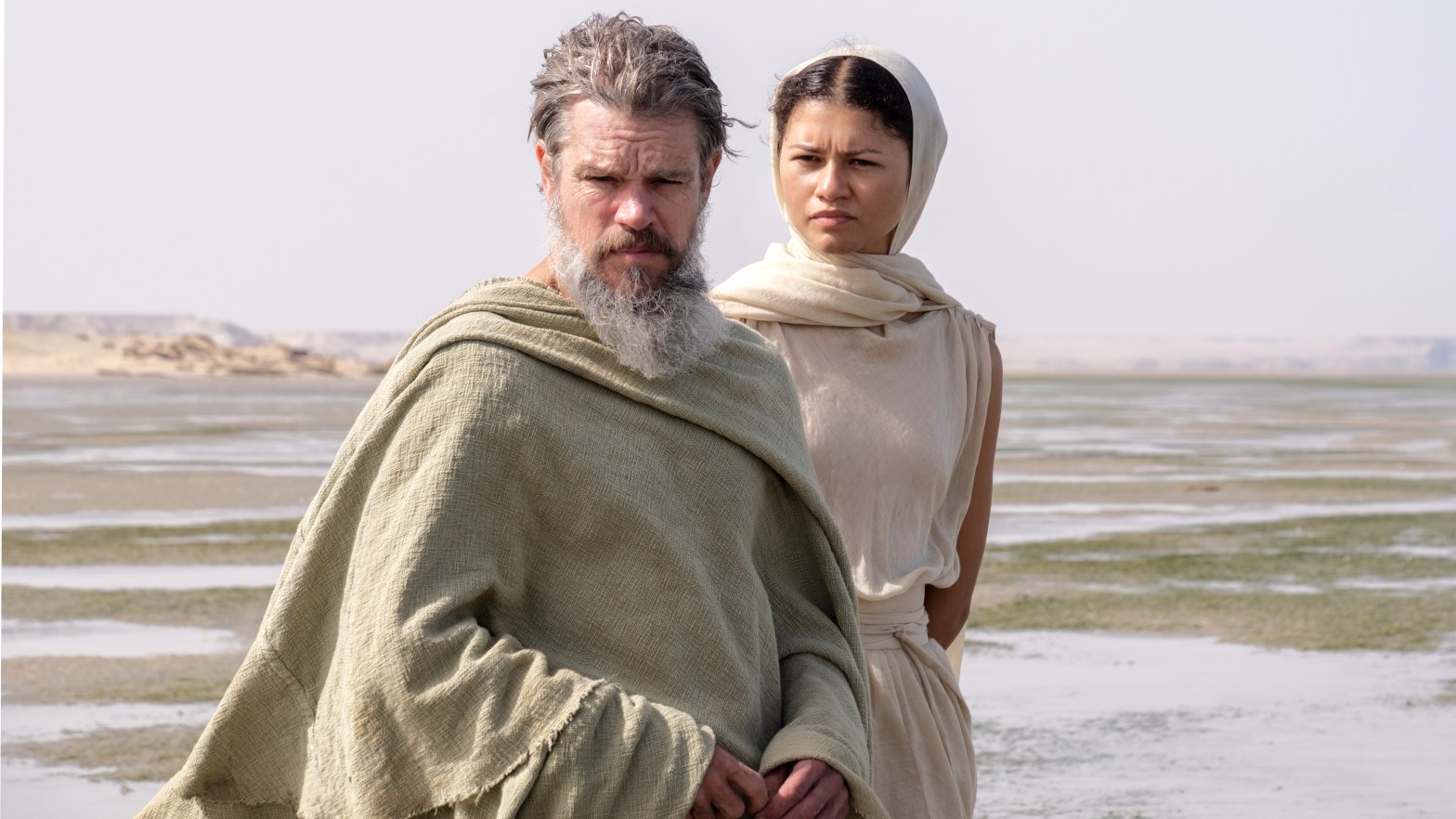
We discuss Christopher Nolan’s The Odyssey with Bilge Ebiri (New York Magazine / Vulture)! We discuss Nolan’s sympathetic Odysseus, a man out of time, burdened by guilt and shame, but also a herald of a new age of science and reason. We consider how Nolan made one of the oldest and grandest stories into a deeply personal one, which provides a lens through which we can revisit his entire filmography. We respond to criticisms of the film and explore ways in which it left us wanting more. Join us and rejoice in cinema!!
Discussion Questions
- What moral qualities make Homer’s Odysseus heroic? Which of those qualities remain heroic to a contemporary audience?
- What responsibilities does a filmmaker have when adapting an ancient text for viewers with very different moral assumptions?
- Does giving Odysseus more guilt make him more complex, or does it simplify him by translating him into a familiar modern hero?
- What changes when The Odyssey is understood as a story about genocide and its aftermath?
- Compare the sword-beating after the suitors’ slaughter with the stomping during the victory speech in Oppenheimer. How does sound change the moral meaning of each scene?
- To what extent is a leader responsible for the character and conduct of the people they command?
- Can the slaughter of the suitors be both just and morally horrifying?
- What is the difference between telling a story and telling a lie? Is the difference found in accuracy, intention, effect, or something else?
- Why is Odysseus’s ability to invent identities both a strength and a moral danger?
- What does it mean to say that a person can become trapped inside the story told about them?
- Why does Odysseus want to hear the Sirens? Is the pursuit of knowledge valuable even when it creates serious danger?
- Why was xenia so important in a world where travel and communication were difficult?
- In what sense can hospitality function as information infrastructure?
- Compare the violations of hospitality by the Cyclops, Odysseus’s men, and the suitors. Are their failures morally equivalent?
- What modern institutions perform the social role once played by travelers, guests, and bards?
- Does Nolan’s film contain gods, psychological projections, natural phenomena, or some combination of the three?
- How does the meaning of Athena change if she is understood as Odysseus arguing with himself?
- Why might cinema find it easier to depict monsters than divinity?
- What does it mean to forgive yourself before passing responsibility to the next generation?
- How does the film portray Penelope and Odysseus as a mature couple? What does their ability to communicate without explanation suggest about intimacy?
- Is homecoming a return to what existed before, or the creation of something new?
Do you talk to ants?
Odysseus