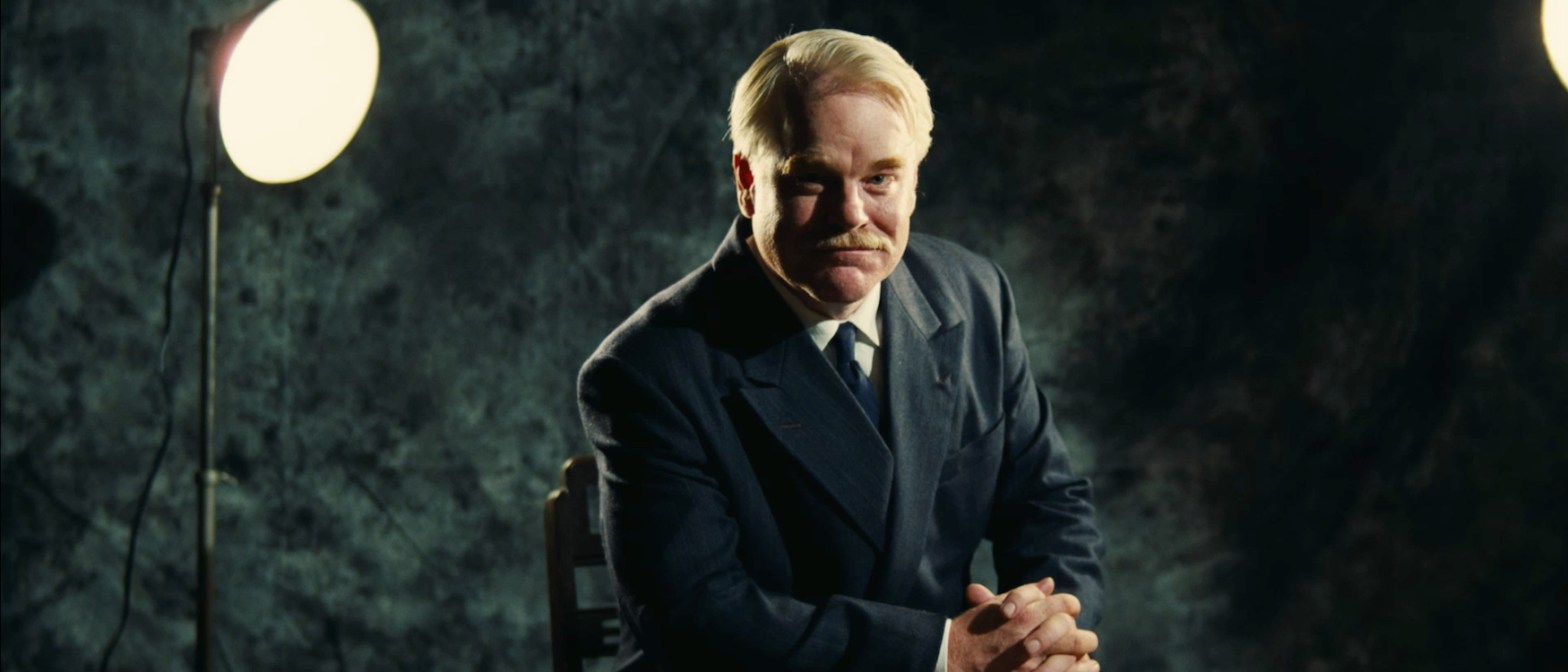
The cows are joined this week by Dan Harris (Philosophy, Hunter College) on their journey through past lives to uncover and exorcise a few trillion-year-old traumas. We consider how Paul Thomas Anderson depicts a divided soul across three individuals struggling to find order and humanity in a chaotic, animalistic, world, and explore how trauma and masculinity intertwine to forge vulnerabilities, and even love, between two men whose life trajectories seem pointed in opposite directions. We can’t pick just one favorite line, but we do note an homage to Nacho Libre and Anderson’s debts to Kubrick and Huston.
[02:55] Dan’s Introduction to the Master
[09:59] Trauma and war
[22:39] Freddie, Lancaster, and masculinity
[33:26] Divided souls in Freud and Plato
[1:02:32] Cults and demagogues
[1:14:34] The significance of the ending
[1:28:24] Favorite lines
[1:41:08] Outro
[1:43:25] Bass traps are not garbage!
If you already know the answers to your questions then why ask, pig fuck?
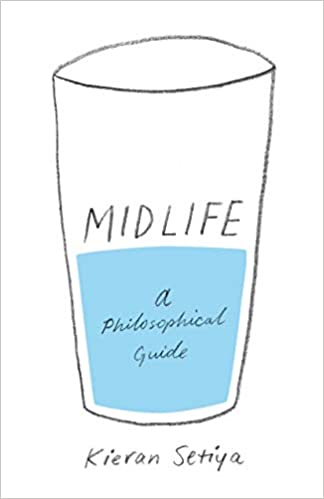
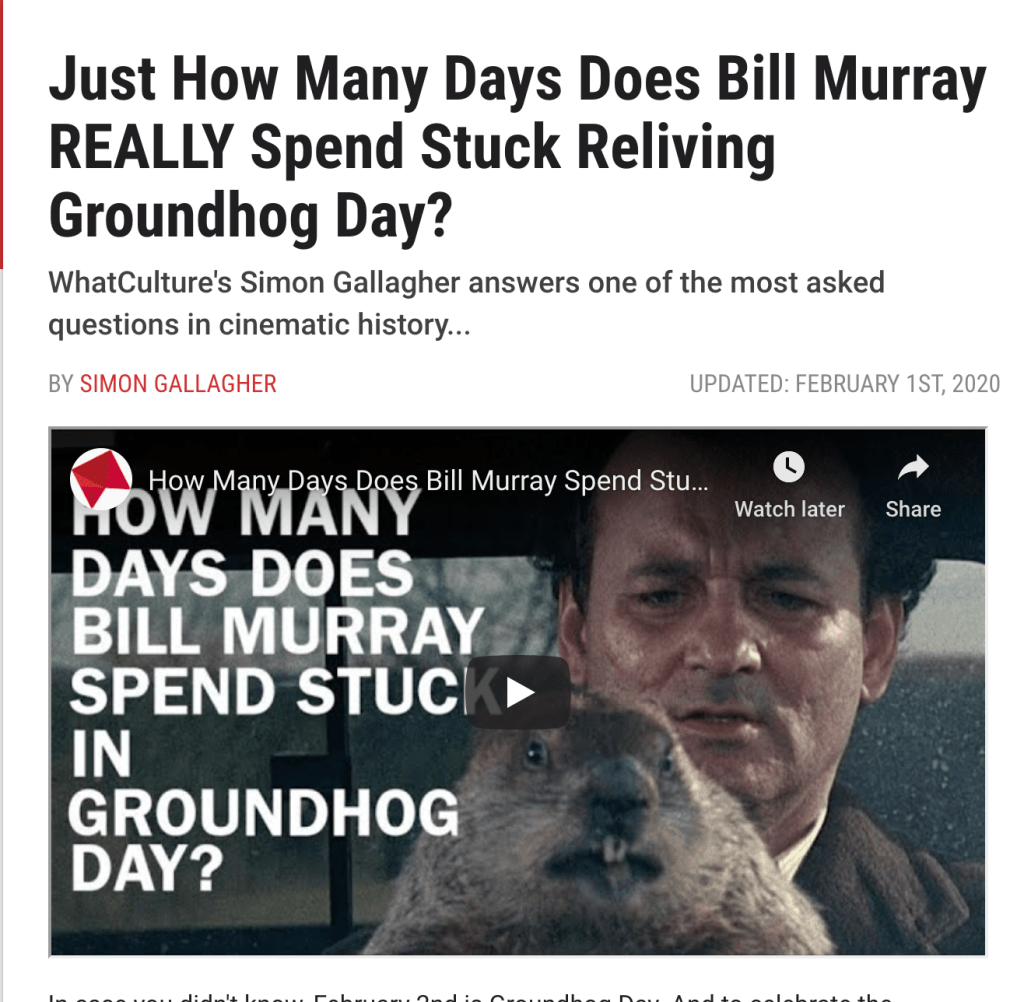
We are joined by Kieran Setiya (MIT) to discuss what makes life worth living, what’s lost in an infinite time loop, and to what extent flourishing within such a loop is possible. Along the way, we explore grief, the midlife crisis, atelic actions, the Buddhist concept of Saṃsāra, Kierkegaard, female agency in a world dominated by the male perspective, and the metaphysics of time loops and time travel. Supervenience violations and imaginative resistance are considered, as is Bill Murray’s career arc and also lessons for our current situation during the COVID-19 pandemic.
The cows reverse entropy to discuss Christopher Nolan’s bewilderingly dense sci-fi masterpiece. Part one is a spoiler-free pitch for the movie, while part two explores themes and philosophical issues. Justin argues that the movie is a thematic trilogy with Inception and Interstellar about the evolving nature of parenthood, while Laura makes the case that Kat (Elizabeth Debicki) is the emotional core of the movie. Also covered are: what it is like to interact with time-inverted objects/people, the metaphysics of time and free will, and which confidently delivered obscure line is best. Listen to the end for a recreation of a pivotal scene!
Justin’s diagrams:
Justin’s story about the inverted painting:
You notice something odd in the trash one day. Investigating, you find a number of strips of colored canvas. You pull them out and arrange them on the ground. Suddenly, you feel the urge to destroy the strips. Taking a pair of scissors to the canvas reveals something odd: cutting the strips actually knits them together. Irritated, you cut faster and faster, but the more you cut, the more the canvas connects. One final cut reveals a painting of an old man holding a paintbrush. You marvel at what has happened, but you’re even more intrigued by the painting itself — it’s familiar somehow, so you decide, rather than destroy it, you’ll frame it and put it on the wall. As the years go by, and the painting becomes part of your daily life, the itch to paint grows in you, so you take painting lessons. One day, there’s a knock at the door and someone has left you a box. Inside is a paintbrush and easel unlike any you’ve encountered. When you pick them up, they remind you of the canvas you found so many years ago in your trash. As you bring the paintbrush towards the canvas, you notice for the first time that the paint on the canvas is wet. You bring the brush to dry it, but as you do, the paint rubs off on the brush. Again and again, brush stroke after brush stroke, you paint the paint off the canvas. Eventually, you’re left with a blank canvas, and finally, glancing in the mirror, you realize who it was all along. There’s a knock at the door, and you know what must be done — you put the paintbrush and easel back in the box and hand it to the man at the door, who, without speaking, walks backwards down the street and out of sight.
Don’t get on the chopper if you can’t stop thinking in linear terms.
The cows are visited by longtime San Francisco resident and old friend Robert Pierce to discuss Francis Ford Coppola’s 70s paranoia thriller. Situated in the tumultuous transition period of the mid-1970s, the movie captures the cynicism of a generation slowly being engulfed by the temptations of urban renewal and fears of privacy violations. We consider how Coppola and Hackman craft a compelling character study out of a protagonist riddled with contradictions by injecting elements of their own life into the story. We also explore the pragmatics of focal stress and marvel at humans’ ability to understand complex nuances of language and film conventions without conscious thought.
Our guest this week, Robert Pierce, worked for years as a photographer and videographer for the Central Subway Project in San Francisco. During that time, he got to know the city intimately, and brings his unique perspective on the locations and context of The Conversation. Below are some of Robert’s photos of San Francisco.
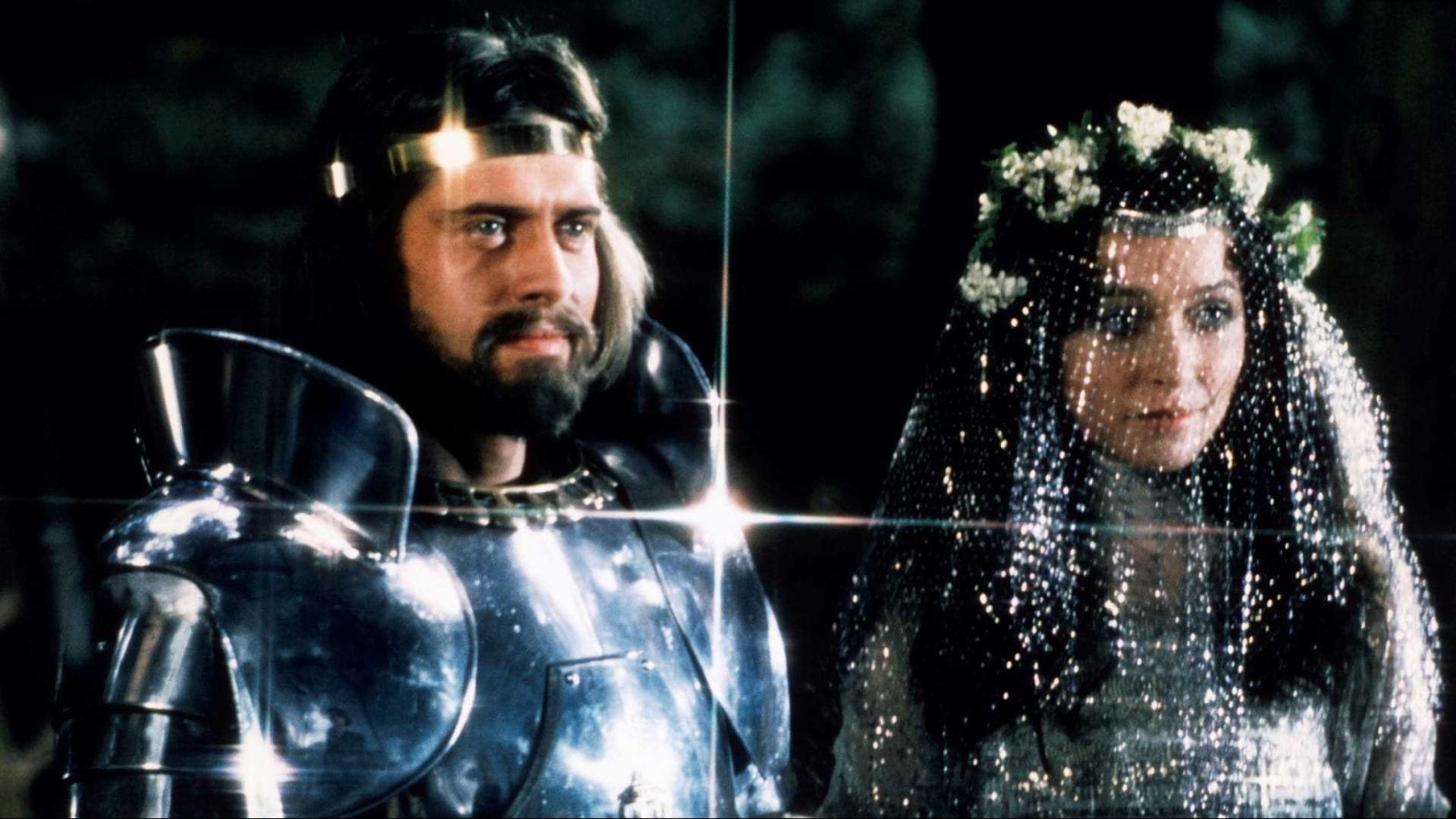
The cows revisit the Arthurian legend with Bilge Ebiri (New York Magazine and Vulture). We discuss how the film weaves together opera and Jungian archetypes while exploring humanity’s complex and often violent relationship with nature, the challenges of self-governance, the allure of a benevolent dictator, and the tragedy befalling the virtuous leader who desires not to lead. Thematic links to the rest of Boorman’s filmography are considered, as well as how Excalibur compares with other portrayals of the quest for the Holy Grail.
Taking its cue from the stage, Boorman’s masterful epic strips down the Arthurian legend to its basic elements. Characters here are mere archetypes, distillations of attributes exhibited in various degrees by all of us, while the narrative excludes anything not essential to the plot. The result is the film equivalent of Wagnerian opera, a tragic prehistory of mankind recounting the conflicts that seeded our collective neuroses. // Blobcat
The cows hit the links with Tim Gilman (WMBR 88.1 FM Boston) to finish off 1996 with a comedy that just might be a bit deeper than it lets on. Why is Happy so angry? Could it be in reaction to the contempt shown by the moneyed elite to the working class, a response that reflects the current rise in popularity of populist demagogues across the world? Or might it be a reflection of his inner turmoil at being terrible at what he loves most? Along the way, we discuss our obligations to care for our elders, property tax rates in Connecticut, the joys of Christopher McDonald as Shooter McGavin, and the worst athlete commercials of all time.
Quite a large and economically diverse crowd here at the Michelob Invitational.
The cows watched Sofia Coppola’s latest and came to very different conclusions, which necessitated an emergency episode to sort it all out. Join us for a maybe autobiographical discussion of the complexities of modern parenting, gendered divisions of cognitive labor, and not losing yourself when asked to shoulder the emotional labor of your friends and family.
Here’s my silly Letterboxd review:
The origin of the idiom “on the rocks” comes from the literal description of a shipwreck, and, like those poor ships who missed the tell-tale signs of land and ended up in shallower waters than they could handle, our heroine Laura is adrift dangerously close to shore without a lighthouse. That is, until the sudden interest of her father in her husband’s possible extramarital affairs reinvigorates her Electra complex, spurring a perfunctory family adventure that culminates anemically and predictably in safe harbor.
Here’s another, more lively, read. Prometheus was chained on the rocks by Zeus for bringing the gods’ fire to humans. Thought of this way, for a relationship to be “on the rocks” is for it to be suffering precisely because of what its members know about themselves and each other, information perhaps gained illicitly, or by simply coming to better know oneself and ones desires. Unlike poor Prometheus, however, a failing relationship is salvageable—but there’s no going back to the pre-fire state of ignorance. Some changes must be borne mutually or not at all. // Blobcat
I think I’m going deaf. I can hear everything fine, except women’s voices.
The cows freeze in Minnesota with friend Molly Perkins in this revisit to the Coen Brothers’ 1996 folktale noir. Themes of faith, deception, encounters with the inexplicable, Scandinavian roots, and ecstatic truth are all discussed, along with highlights of favorite supporting cast members and a head-to-head comparison of psycho killers Gaear Grimsrud (Peter Stormare) and Anton Chigurh (Javier Bardem).
A fake folktale about the choices we make and our inability to make sense of it all. Yet, unlike in other Cohen films, and unlike the characters in this, we the audience are shown enough to find our way through the chaos and understand how the disparate elements fit together. It’s a compelling trick that makes this film the optimistic sibling to No Country’s unrelenting nihilism or A Serious Man’s quizzical frustration.
I’m not sure I 100% agree with your police work there, Lou.
Join the two cows on their journey into the world of fantasy basketball-star-crossover vehicles, featuring guest Vishal Dave! It’s 1996 and Michael Jordan is fresh back from retirement, ready to take on the Monstars and save the NBA from a bunch of talentless hacks. Is there a tragic emptiness at the core of Space Jam, marked by Jordan’s self-destructive quest for dominance? And how does it compare to what might be its polar opposite — Kazaam, a rapping genie movie about a child who comes to accept the imperfections of his parents, starring the ebullient Shaquille O’Neal? Tune in to find out and dig in to some mid-nineties pop classics!
Space Jam
Sometimes all a celebrity hero athlete wants is to live a normal life among the non-sycophantic, except when that person is Michael Jordan, whose legendary competitiveness never met a bet he wouldn’t double down on. Here, the stakes become life and death when MJ wagers a lifetime of having to please fans for the chance to win back his friends’ powers and save the Looney Toons. Not a smart move, but you don’t get to the top without some ill advised bets on yourself.
Kazaam
Max has three wishes and three father figures to boot, but he isn’t sure whether he ultimately wants to save his biological father, accept his adoptive father, or make friends with his genie father. Shaq is winning as the titular Kazaam, even when making a fool of himself rapping and shooting sparks out of his boombox.
Shoulda seen us last night in Malick’s limo, just chillin, eat goat eyes, just chillin.
The cows are joined by Mattia Acetoso to discuss the feature debuts of Wes and Paul Thomas Anderson. What might we learn about these original and influential directors’ first films? Both movies center around misfits who retreat from a random and often harsh reality to form their own surrogate families and find new ways of living. Along the way, genres are subverted, narratives obfuscated, and souls redeemed.
Just hear me out. It’s called hinckley cold storage. Here are just a few key ingredients: dynamite, pole vaulting, laughing gas, choppers. Can you see how incredible this is going to be? Hang-gliding, come on!


















 Cows in the Field